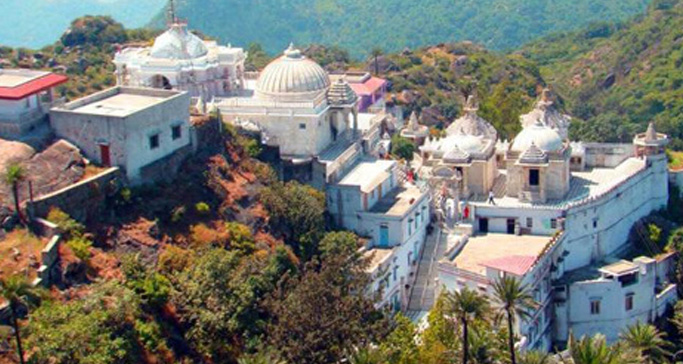

About Mount Abu – Rajasthan's Only Hill Station
Nestled at an elevation of 1,220 metres in the ancient Aravalli Range, Mount Abu stands as a remarkable exception in Rajasthan — a state overwhelmingly characterised by arid deserts and scorching plains. This verdant hill station, cloaked in dense subtropical forests, cascading streams, and cool mist, has served as a summer retreat for Rajput royalty, a pilgrimage hub for Jain worshippers, and a spiritual centre for the Brahma Kumaris movement for centuries.
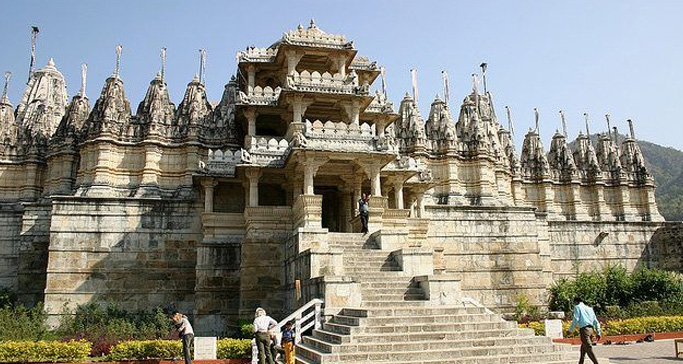
The town itself sits on a large plateau about 22 km long and 9 km wide, bordered by sheer granite cliffs on three sides. Its most celebrated landmark — the Dilwara Jain Temples — is widely regarded as one of the finest examples of marble architecture in the world, on par with the Taj Mahal in craftsmanship. Built between the 11th and 13th centuries CE, the temples' interiors are so intricately carved that visitors often stand speechless beneath ceilings that appear to have been spun from lace.
Beyond architecture, Mount Abu offers Nakki Lake — the only natural lake in Rajasthan — the towering Guru Shikhar peak, a rich wildlife sanctuary harbouring leopards and sloth bears, and a thriving bazaar culture blending Rajasthani and Gujarati traditions. Whether you seek spiritual solitude, heritage immersion, nature walks, or simply respite from Rajasthan's heat, Mount Abu delivers an experience that is unique in the entire state.
Mount Abu Wildlife Sanctuary & Nakki Lake
🏭 Mount Abu Wildlife Sanctuary
Declared a protected sanctuary in 1960 (re-notified in 1980), the Mount Abu Wildlife Sanctuary spans 288 sq km of sub-tropical moist deciduous forest across the Aravalli Range. It represents one of the few remaining forested tracts in Rajasthan and is a critical biodiversity corridor connecting the Western Ghats to the Himalayan foothills.
The sanctuary's apex predator is the Indian Leopard — sightings, while uncommon, are documented year-round. The forest is also home to Sloth Bears, Wild Boar, Sambar Deer, Indian Porcupine, Pangolin, Striped Hyena, and the rare Wolf. For birdwatchers, over 250 avian species have been recorded here, including the Grey Jungle Fowl, Indian Pitta, Crested Serpent Eagle, and several migratory species that arrive between October and March. The sanctuary's rugged trails also offer excellent trekking opportunities, with routes leading from the main town through dense sal and dhak forests.
| Detail | Information |
|---|---|
| Area | 288 sq km |
| Best Wildlife Season | November to June (drier conditions improve sighting chances) |
| Entry Point | Main gate near Mount Abu town; forest department permission required for inner trails |
| Key Species | Leopard, Sloth Bear, Sambar, Wild Boar, Pangolin, Grey Jungle Fowl, Indian Pitta |
| Trekking | Permitted with a licensed forest guide; popular routes lead to Guru Shikhar and Achalgarh |
🍃 Nakki Lake
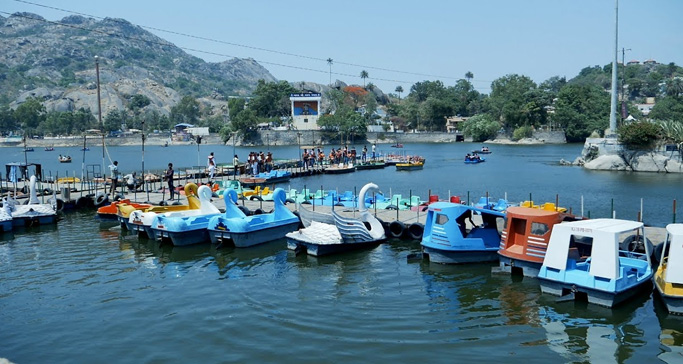
At the heart of Mount Abu lies Nakki Lake — a serene, glacially-formed waterbody at an altitude of approximately 1,200 m, making it the only natural lake in Rajasthan. The lake spans roughly 30 acres and is encircled by rocky hills, temples, and lush gardens. Its name — from the Sanskrit nakha (nail) — comes from a Hindu legend that gods used their nails to excavate it as a refuge from the demon Bashkali.
Boat rides on the lake (paddle boats and row boats available for ₹60–₹100 per person) offer a tranquil way to enjoy the surrounding scenery. The Raghunath Temple on the lake's shore is an important pilgrimage site. Two distinctive rock formations — Toad Rock (resembling a toad about to leap) and Nun Rock — are popular short treks from the lakeside. The promenade around the lake is lined with cafes, stalls selling Rajasthani handicrafts, and vendors offering local snacks like churma and mirchi pakora.
Top Places to Visit in Mount Abu
1. Dilwara Jain Temples – A Marvel in Marble
Considered one of the greatest architectural achievements in India, the Dilwara Temples comprise five Jain temples built between the 11th and 13th centuries CE. The Vimal Vasahi Temple (1031 CE, dedicated to Adinath) and the Luna Vasahi Temple (1230 CE, dedicated to Neminath) are the most celebrated. Every surface — ceilings, columns, archways, doorways — is carved from pure white marble with a precision and delicacy that seems physically impossible given the tools of the era. Remarkably, the temples were designed to appear plain from outside so as not to attract raiders, concealing their extraordinary interiors behind simple stone walls.
2. Guru Shikhar – The Roof of the Aravallis
Standing at 1,722 metres, Guru Shikhar is the highest peak in the entire Aravalli Range — and indeed the highest point between the Himalayas and the Nilgiris. The summit is reached by a short flight of steps (approximately 300 steps) from the road head, and rewards visitors with a truly panoramic 360° view over the forested plateau, distant plains, and on clear days, the shimmering salt marshes of Kutch to the west. The peak is crowned by the Atri Rishi Temple, dedicated to the sage Atri, and the Guru Dattatreya Temple — housing an incarnation of the Hindu trinity (Brahma, Vishnu, and Shiva). A BSNL telescope tower at the summit is a local landmark.
3. Achalgarh Fort & Achaleshwar Mahadev Temple
Built by the Paramara Rajputs and renovated in 1452 CE by Rana Kumbha of Mewar, Achalgarh Fort occupies a commanding hilltop position about 11 km from Mount Abu town. While the fort itself is largely in ruins, its ramparts offer dramatic views over the surrounding valleys. Immediately below the fort lies the revered Achaleshwar Mahadev Temple — one of the twelve jyotirlingas (sacred Shiva shrines), famous for a natural hole in the sanctum floor said to reach the netherworld, kept filled with water by a divine spring. Beside the temple stands a large stone buffalo statue, associated with local legends about three demon kings.
4. Sunset Point & Honeymoon Point
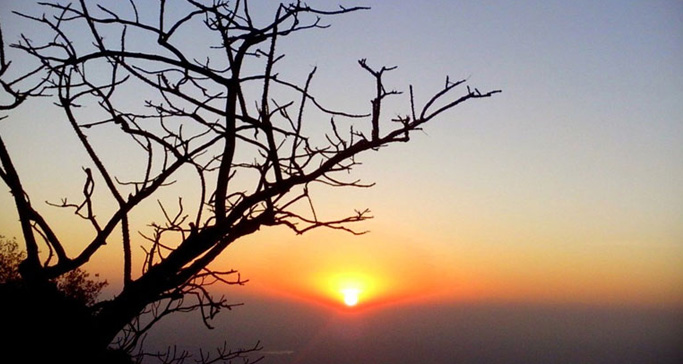
Sunset Point is Mount Abu's most iconic and most visited viewpoint, perched on the western edge of the plateau. Every evening, visitors gather to watch the sun descend behind the Aravalli ridges in a blaze of amber, rose, and violet — a spectacle made all the more dramatic by the sharp silhouettes of rocky outcrops and forest canopy. Arrive at least 30 minutes early, especially between October and February when it gets crowded. Honeymoon Point (also called Anadra Point), nearby, offers equally spectacular views of the plains below and is popular with couples for its quieter atmosphere and a natural rock arch framing the sunset.
5. Om Shanti Bhawan – Brahma Kumaris World Spiritual University
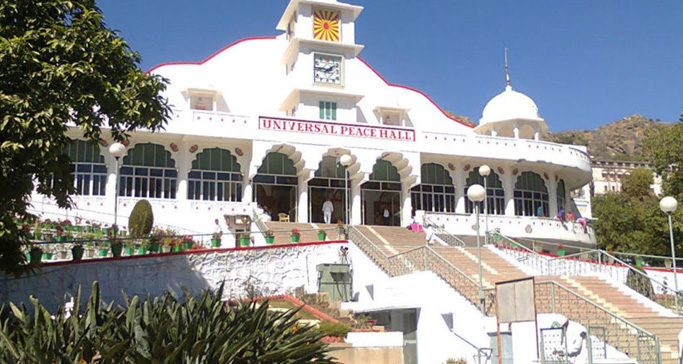
Mount Abu is the global headquarters of the Brahma Kumaris World Spiritual University, a UN-affiliated organisation with centres in over 140 countries. The vast Om Shanti Bhawan complex — including the iconic Pandav Bhavan, Peace Hall, and the serene Peace Park — is open to visitors of all faiths. Guided meditation sessions are offered daily, and the Gyan Sarovar campus a few kilometres from town provides residential retreat programmes. The Brahma Kumaris have played a significant role in shaping Mount Abu's identity as a centre for inner tourism and mindfulness, drawing seekers from across the world.
6. Trevor's Tank (Crocodile Park)
A hidden gem 5 km from Mount Abu town, Trevor's Tank is a small reservoir built by British engineer Major Trevor in the late 19th century, now a protected habitat for Marsh Mugger Crocodiles — an unusual find at this altitude. The surrounding forested trails are excellent for birdwatching, particularly for kingfishers, herons, and raptors. The tank is also one of the few places in Rajasthan where you can observe mugger crocodiles in a natural highland setting. Arrive in the early morning for the best wildlife experience.
Best Time to Visit Mount Abu
Mount Abu enjoys a significantly cooler and more pleasant climate than the rest of Rajasthan year-round. However, the experience and accessibility vary by season:
| Season | Months | Weather & Highlights | Rating |
|---|---|---|---|
| Winter | Nov – Feb | Cool and crisp (8–25°C). All attractions accessible. Peak season for Indian tourists. Festivals: Winter Festival (Dec). Best for sightseeing and trekking. | ⭐⭐⭐⭐⭐ |
| Summer | Mar – Jun | Warm days, cool nights (20–33°C) — much cooler than the plains. Peak for visitors from Gujarat and Rajasthan seeking respite. Summer Festival held in May/June. Good wildlife sightings near water. | ⭐⭐⭐⭐ |
| Monsoon | Jul – Sep | Heavy rainfall (avg. 1,600 mm). Forest turns intensely green and beautiful. Nakki Lake and waterfalls are spectacular. Roads can be slippery. Fewer tourists — good for solitude seekers. | ⭐⭐⭐ |
| Post-Monsoon | Oct | Transitional season. Forests still lush, weather comfortable (18–28°C). Fewer crowds before the winter tourist season begins. Good photography conditions. | ⭐⭐⭐⭐ |
Entry Fees & Visitor Information (2024)
| Attraction | Entry Fee (Indians) | Entry Fee (Foreign) | Timings |
|---|---|---|---|
| Dilwara Jain Temples | Free | Free | 12:00 PM – 5:00 PM (non-Jains) |
| Guru Shikhar | Free | Free | Sunrise to Sunset |
| Achalgarh Fort & Temple | Free | Free | 5:00 AM – 9:00 PM (Temple) |
| Mount Abu Wildlife Sanctuary | ₹40 / person | ₹200 / person | 6:00 AM – 6:00 PM (winter); 5:30 AM – 6:30 PM (summer) |
| Nakki Lake Boating | ₹60–₹100 / person | ₹60–₹100 / person | 8:00 AM – 7:00 PM |
| Om Shanti Bhawan | Free | Free | 8:00 AM – 8:00 PM |
| Sunset / Honeymoon Point | Free (small parking fee) | Free | Open daily |
| Trevor's Tank | Small forest fee | Small forest fee | 6:00 AM – 6:00 PM |
Suggested Itinerary for Mount Abu (3 Days / 2 Nights)
How to Reach Mount Abu
✈️ By Air
Mount Abu has no airport. The two most practical options are:
- Udaipur Airport (UDR) — 185 km, approximately 3.5 hours by taxi. Good connectivity from Delhi, Mumbai, and Jaipur. Recommended for those combining Mount Abu with Udaipur.
- Ahmedabad Airport (AMD) — 221 km, approximately 4 hours by taxi. Excellent domestic and international connectivity. A better choice for travellers coming from western India or abroad.
🚊 By Train
Abu Road Railway Station (station code: ABR) is the nearest railhead, located 28 km from Mount Abu town and connected by a well-maintained ghat road with regular hairpin bends. Key trains from major cities:
| Route | Train Name | Approx. Duration |
|---|---|---|
| Delhi → Abu Road | Ashram Express / Aravalli Express | 12–14 hours |
| Ahmedabad → Abu Road | Ahmedabad–Jodhpur Express | 4–5 hours |
| Jaipur → Abu Road | Multiple daily services | 5–6 hours |
| Mumbai → Abu Road | Gujarat Mail / Rann Express | 14–16 hours |
From Abu Road, RSRTC state buses (every 30–60 min, ₹40–60) and private taxis (₹350–500 per cab) connect to Mount Abu town.
🚌 By Road
Mount Abu is well-connected by road via National Highway 27 (formerly NH-14). Driving distances from key cities:
- Udaipur to Mount Abu: 185 km (~3.5 hours) via NH 27
- Ahmedabad to Mount Abu: 221 km (~4 hours) via NH 48
- Jodhpur to Mount Abu: 260 km (~5 hours) via NH 25
- Jaipur to Mount Abu: 490 km (~8–9 hours) via NH 48
- Delhi to Mount Abu: ~760 km (~13–14 hours overnight)
RSRTC and private operators run AC/non-AC buses from Ahmedabad, Udaipur, Jodhpur, and Jaipur. The road up to Mount Abu from Abu Road is steep and winding — private cars and taxis handle it comfortably; large buses are managed by experienced local drivers.
Frequently Asked Questions about Mount Abu
Is Mount Abu worth visiting in summer?
Absolutely. Mount Abu's summer temperatures (20–33°C) feel dramatically cooler than the scorching 40–48°C of Rajasthan's plains. It is the preferred summer escape for families from Gujarat and Rajasthan. The forest is green and lush after late summer rains, wildlife sightings improve near water sources, and the famous Summer Festival (May/June) adds a festive atmosphere. Peak crowd season in summer means accommodation should be booked well in advance.
Can I see leopards in Mount Abu Wildlife Sanctuary?
Leopard sightings in the sanctuary are possible but not guaranteed — these are shy, elusive animals. Your best chance is during early morning safaris (6–9 AM) between November and May when vegetation is sparser and the animals are more active. Hiring a certified forest guide significantly improves sighting chances. The sanctuary is also excellent for sloth bear, sambar deer, and a wide variety of birds even if leopards remain hidden.
What is Mount Abu famous for buying (shopping)?
The main market around Nakki Lake is a hub for Rajasthani handicrafts and Gujarati goods. Popular buys include: silver jewellery and trinkets, Rajasthani block-print textiles and dupattas, hand-embroidered bags and cushion covers, local honey from Aravalli forests, wooden toys, and Brahma Kumaris spiritual literature and products. The market is also known for a wide variety of Rajasthani sweets, including churma laddoo and ghevar.
Is Mount Abu safe for solo female travellers?
Mount Abu is considered one of the safer hill stations in India for solo female travellers. The strong presence of the Brahma Kumaris (predominantly led by women) has fostered a respectful, spiritually oriented local culture. The main town is compact and walkable, and the bazaar area is well-lit and busy until 10 PM. As with any destination, standard precautions apply — inform your accommodation of your plans for treks to remote spots like Guru Shikhar and Trevor's Tank, and use licensed guides for forest trails.
