The Water Palace of Rajasthan — Floating on Man Sagar Lake
Location
Amer Road, Jaipur, Rajasthan 302002
Built By
Maharaja Sawai Pratap Singh
Year Built
c. 1799 AD
Architecture
Rajput–Mughal Fusion
Timings
6:00 AM – 6:00 PM (All Days)
Entry Fee
Free (Boat: ₹10 / ₹50)
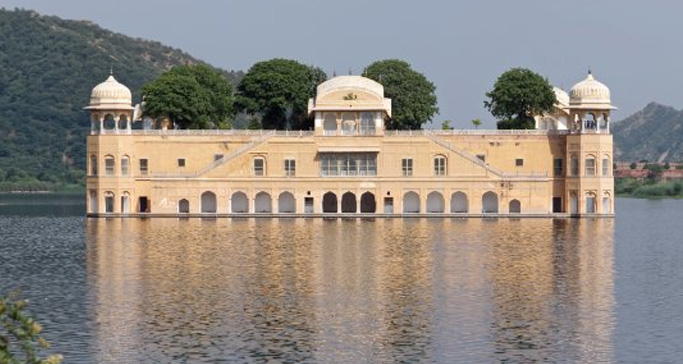
Why Visit: Jal Mahal is one of Jaipur’s most iconic landmarks — a five-storeyed palace where four floors remain submerged in Man Sagar Lake, creating a breathtaking floating illusion. A must-see for heritage lovers and photographers.
Last reviewed & updated: — Verified by our Jaipur travel experts
History of Jal Mahal, Jaipur
Jal Mahal — literally “Water Palace” in Hindi — is among the most photographed and historically layered landmarks in Rajasthan. Standing serenely in the centre of Man Sagar Lake on Amer Road, the palace carries a fascinating origin story rooted in the royal traditions of the Kachhwaha Rajput dynasty that ruled Jaipur for centuries.
The founding of Jal Mahal is a matter of historical debate. One widely accepted account credits Maharaja Madho Singh I with constructing the original structure around the 1750s, primarily as a hunting retreat for duck-shooting parties on the lake. A second, better-documented account attributes the palace’s current five-storeyed form to Maharaja Sawai Pratap Singh, who undertook significant rebuilding and expansion around 1799 AD. Regardless of its exact origins, Jal Mahal was never designed as a permanent royal residence; its purpose was recreational and ceremonial.
Did You Know? Jal Mahal was never a residence. It served exclusively as a hunting lodge and leisure retreat for Jaipur’s rulers, who hosted duck-shooting parties on Man Sagar Lake. The rooftop terrace offered panoramic views across the Aravalli hills and the shimmering water.
Renovation Under the Kachhwaha Rulers
Following its original construction, the palace was significantly extended by Maharaja Jai Singh II of Amber in the 18th century, who also commissioned the expansion of the Man Sagar Dam that controls the lake’s water levels. Over the following decades, rising lake water and seasonal flooding began to erode the palace’s lower storeys, causing structural subsidence and waterlogging damage that went largely unaddressed for over a century.
21st-Century Restoration
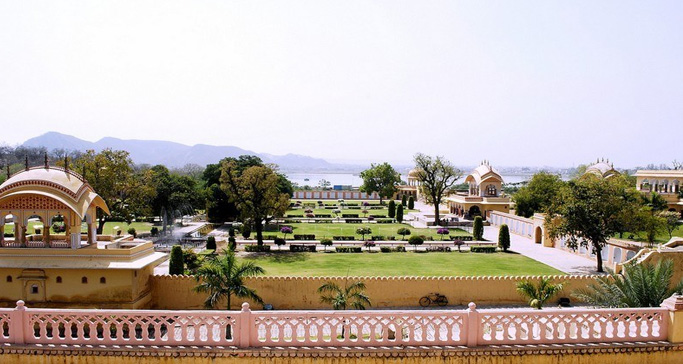
By the late 20th century, Man Sagar Lake had become severely polluted by urban wastewater and the palace showed considerable structural deterioration. A comprehensive heritage restoration programme launched in the early 2000s involved stabilising the palace foundations, treating the lake ecology, and carefully restoring the top storey’s architectural elements. The original rooftop Mughal-style charbagh garden could not be fully recovered, though proposals exist to recreate a terraced garden modelled on the famous gardens of nearby Amer Palace.
Architecture of Jal Mahal
Jal Mahal is a masterpiece of Rajput–Mughal fusion architecture — a style that blends the geometric grandeur and ornamental richness of the Mughal court with the martial elegance and organic spatial logic of Rajput building traditions. Constructed primarily from warm-toned Dholpur red sandstone, the palace harmonises visually with both the shimmering blue of Man Sagar Lake and the ochre-pink landscape of the surrounding Aravalli hills.
Feature
Details
Total Storeys
Five (four submerged, one visible above water)
Lake Depth (Max)
Approximately 15 feet (4.5 metres)
Lake Depth (Min)
Approximately 4.9 feet (1.5 metres)
Primary Material
Dholpur red sandstone
Architectural Style
Rajput–Mughal Fusion
Rooftop Features
Four octagonal chhatri pavilions + central pavilion
Windows / Balconies
Arched jharokha balconies with Mughal detailing
Water Body
Man Sagar Lake, Amer Road, Jaipur
The Floating Illusion
The most captivating aspect of Jal Mahal is the optical illusion it creates. Man Sagar Lake is deep enough to conceal four of the five storeys entirely; the rooftop level appears to sit directly on the water’s surface. This effect is most striking during the monsoon months (July–September), when the lake fills to capacity and the palace seems to levitate above a sheet of rain-fed water, with the Nahargarh hills mirrored in the background.
Rooftop Terrace and Chhatris
The visible top storey features a broad open terrace framed by four ornate octagonal chhatris (domed kiosks) at each corner — a quintessential marker of Rajput palatial architecture. Mughal influence is evident in the delicate arched corridors, the symmetrical layout, and the floral stucco work on the pavilion columns. Together, these elements make Jal Mahal one of the finest examples of architectural synthesis in 18th-century Rajasthan.
Bird Sanctuary: Man Sagar Lake is a recognised bird sanctuary. Between October and February, visitors can spot migratory species including painted storks, bar-headed geese, and several species of ducks — making this a rewarding detour for nature and wildlife enthusiasts.
Jal Mahal Timings, Entry Fee & Visitor Information
Information
Details
Opening Hours
6:00 AM to 6:00 PM, all days of the week
Palace Interior Access
Restricted — not open to general public
Lakeside Viewing
Free of charge (no ticket required)
Boat Ride — Indian Nationals
Approximately ₹10 per person
Boat Ride — Foreign Visitors
Approximately ₹50 per person
Photography
Permitted from the lakeside; no permit needed
Best Season to Visit
October to March (cool, 15–25°C)
Best Time of Day
Sunrise (6–8 AM) or Sunset (4:30–6 PM)
Nearest Airport
Jaipur International Airport (~11 km, ~25 min)
Nearest Railway Station
Jaipur Junction (~9 km, ~20 min by cab)
Nearest Bus Stand
Sindhi Camp Bus Stand (~8 km)
Photography Tip: The most iconic shot of Jal Mahal is captured from the lakeside promenade along Amer Road. Arrive at dawn for golden-hour reflections on the water, or at dusk when the palace lights up against the darkening sky. A wide-angle lens works best for capturing the full palace and its reflection simultaneously.
How to Reach Jal Mahal, Jaipur
Jal Mahal is located on Amer Road (NH-248A), approximately 6.5 km north of Jaipur city centre — roughly midway between the old city and Amer Fort. Its position on a busy heritage route makes it easy to combine with a visit to Amer Palace, Nahargarh Fort, or Kanak Vrindavan Garden on the same day.
✈
By Air
Jaipur International Airport is ~11 km away. Pre-paid taxis and app-based cabs (Ola, Uber) take roughly 25–35 minutes.
🚂
By Train
Jaipur Junction railway station is ~9 km away. Auto-rickshaws and taxis are readily available outside the station.
🚌
By Bus
RSRTC buses from Sindhi Camp Bus Stand ply the Amer route and stop near Jal Mahal. Very affordable for budget travellers.
🚗
By Cab / App
Ola and Uber operate across Jaipur. A ride from MI Road area to Jal Mahal takes 15–25 minutes depending on traffic.
🚢
By Auto-Rickshaw
Shared and private autos are plentiful on Amer Road. Agree on the fare before boarding — a popular budget-friendly option.
🚙
By Private Car
From city centre: MI Road → Zorawar Singh Gate → Amer Road. Limited paid parking is available along the lakeside.
Visitor Tips for Jal Mahal Jaipur
Visit at sunrise or early evening for dramatic reflections and the best photography light on the red sandstone.
Entry inside the palace is not permitted — plan to enjoy the exterior view from the lakeside promenade.
Pair your visit with Amer Fort (4 km) and Kanak Vrindavan Garden (1.5 km north) for a full-day heritage outing.
The monsoon season (July–September) fills Man Sagar Lake fully, making the floating effect most dramatic — though humidity is high.
Bring binoculars between October and February to spot migratory birds including painted storks and bar-headed geese on the lake.
Carry cash for auto-rickshaw and boat ride payments; card machines are rarely available from local vendors.
Avoid mid-afternoon visits in summer (May–June) — Jaipur temperatures can exceed 42°C. Start early or visit after 4 PM.
The lakeside is well-lit after dark; a post-sunset visit when the palace is illuminated against the night sky is popular with local visitors.
Frequently Asked Questions — Jal Mahal Jaipur
Jal Mahal is accessible to visitors from 6:00 AM to 6:00 PM, seven days a week including all public holidays. The lakeside promenade is best visited at sunrise or before sunset for optimal photography conditions.
No — public entry inside the palace building is currently restricted. Visitors enjoy the palace from the Man Sagar Lake shoreline and may take boat rides around the perimeter. No interior tour is available.
Viewing Jal Mahal from the lakeside promenade is completely free. Boat rides cost approximately ₹10 per person for Indian nationals and ₹50 per person for foreign tourists.
Jal Mahal is primarily attributed to Maharaja Sawai Pratap Singh of the Kachhwaha Rajput dynasty, who rebuilt and expanded it around 1799 AD. An earlier version is credited to Maharaja Madho Singh I, dating to the 1750s. Both rulers used it as a hunting lodge.
The best time is October to March when Jaipur’s weather is cool (15–25°C). Within the day, early morning (6–9 AM) and the golden hour before sunset offer the best photography light and a comfortable experience.
Jal Mahal has five storeys. Four remain permanently submerged in Man Sagar Lake; only the rooftop level — adorned with four ornamental chhatri pavilions — is visible above the waterline, creating the famous floating palace appearance.
✍
Indian Travel Dictionary Editorial Team
India Heritage & Destination Travel Specialists — Est. 2010
This guide is researched and maintained by our India travel specialists with over a decade of hands-on experience covering Rajasthan’s heritage sites. All visitor information is cross-verified against official sources and updated regularly to reflect current on-ground conditions.